A
Back to news
August 2026ArchDaily~2 min read
Labor Shortage Is Changing Architecture: From Brasília to Mass Timber Construction
labor shortagemass timberprefabricationmodular constructionarchitectureBrasília
Architecture has always depended on the availability of labor. The construction of Brasília in 1958 required tens of thousands of migrants — candangos, many of whom had no specialized training. Today, as the world faces an acute shortage of skilled construction workers, the industry is seeking new paths: from digital design to prefabricated wooden structures.
The Labor Crisis as a Driver of Innovation
According to ArchDaily, the labor shortage is no longer a temporary problem but has become a structural challenge for architecture. Amid growing demand for housing and infrastructure, developers and designers are being forced to reconsider traditional construction methods. Unlike the mid-20th century, when large-scale projects were made possible by the mass mobilization of people, today the focus is on reducing dependence on manual labor.
Mass Timber as an Answer to the Labor Shortage
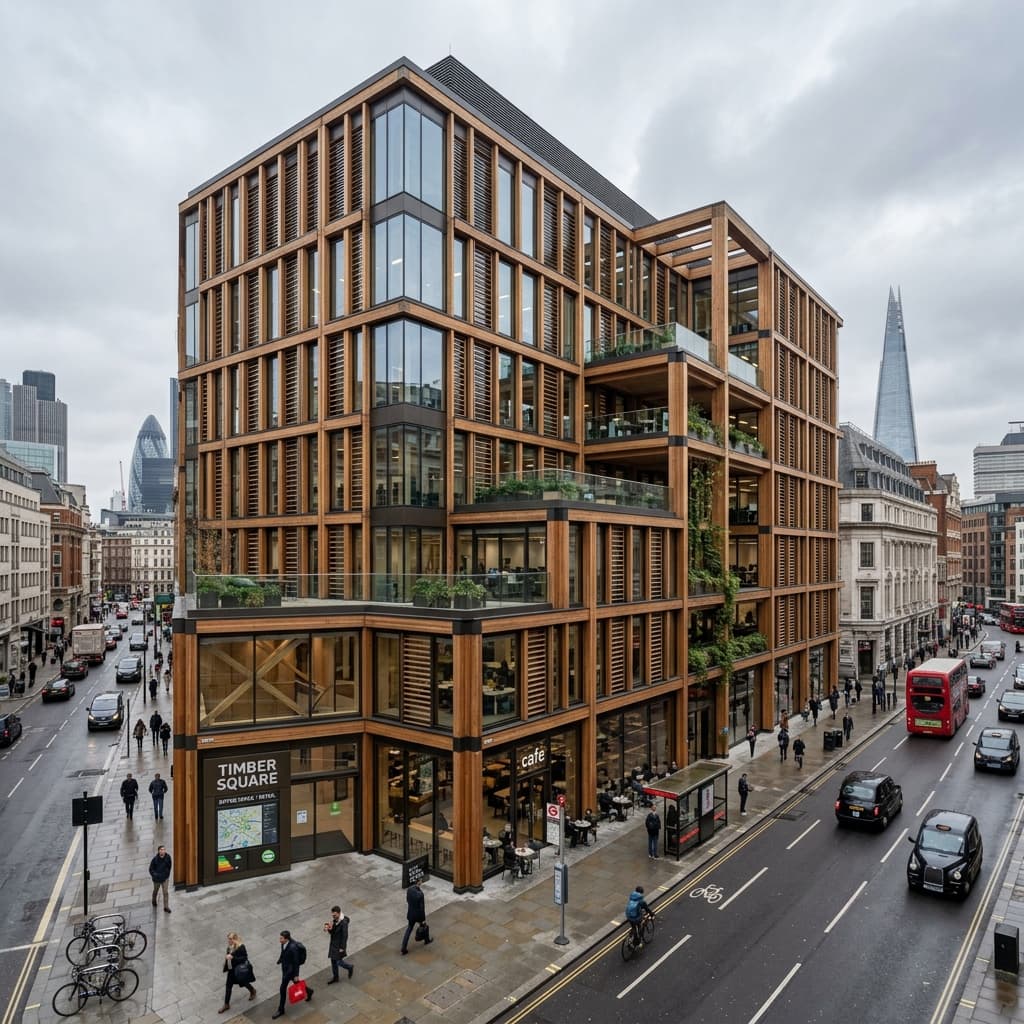
One of the most promising areas is mass timber construction. Glued laminated timber, CLT panels, and other engineered wood elements make it possible to shift a significant portion of the work to factory floors. Only module assembly remains on the construction site, which reduces the need for large numbers of workers and speeds up building erection. Prefabrication and modularity also reduce dependence on weather conditions and improve installation accuracy.
Lessons from Brasília and Modern Realities
The history of Brasília demonstrates that even grand projects can be realized with sufficient mobilization of resources. However, today's demographic trends and migration restrictions make such an approach unlikely. Architects are increasingly designing buildings adapted to automated production and a minimum number of operations on site. This changes not only construction but also aesthetics itself: wooden facades, visible connections, and modular rhythms are becoming a new architectural language.
Conclusion
The labor shortage is not a temporary inconvenience but a catalyst for long-overdue changes. Mass timber and prefabrication not only solve the problem of worker shortages but also pave the way for more sustainable and efficient construction. As past experience shows, architecture can adapt to any challenge if it is willing to rethink its methods.
Visual
The image is tied to the article topic and stored in the portal's local media library.