A
Back to news
August 2026ArchDaily~2 min read
Promenade Architecture: How Le Corbusier's Principle Finds New Life in Mass Timber Construction
mass timber constructionarchitectureLe Corbusierpromenade architecturalesustainable design
What is promenade architecturale?
The term promenade architecturale, introduced by Le Corbusier, describes an architectural device in which space unfolds gradually through the visitor's movement. The example of the Villa Savoye (1929) shows how a ramp leads one along an ascending trajectory to the roof garden, where the building enters into dialogue with the sky and nature. This method became a manifesto of modernism, combining functionality, aesthetics, and context.
Relevance a century later
Contemporary architecture continues to use promenade architecturale, adapting it to new challenges—urban density, climate change, and the demand for human scale. Today, the principle manifests in open staircases, terraces, and smooth ramps that turn movement into an event. It becomes especially valuable in public buildings, where visitor orientation and the creation of a memorable experience are essential.
Timber as a material for promenade architecture
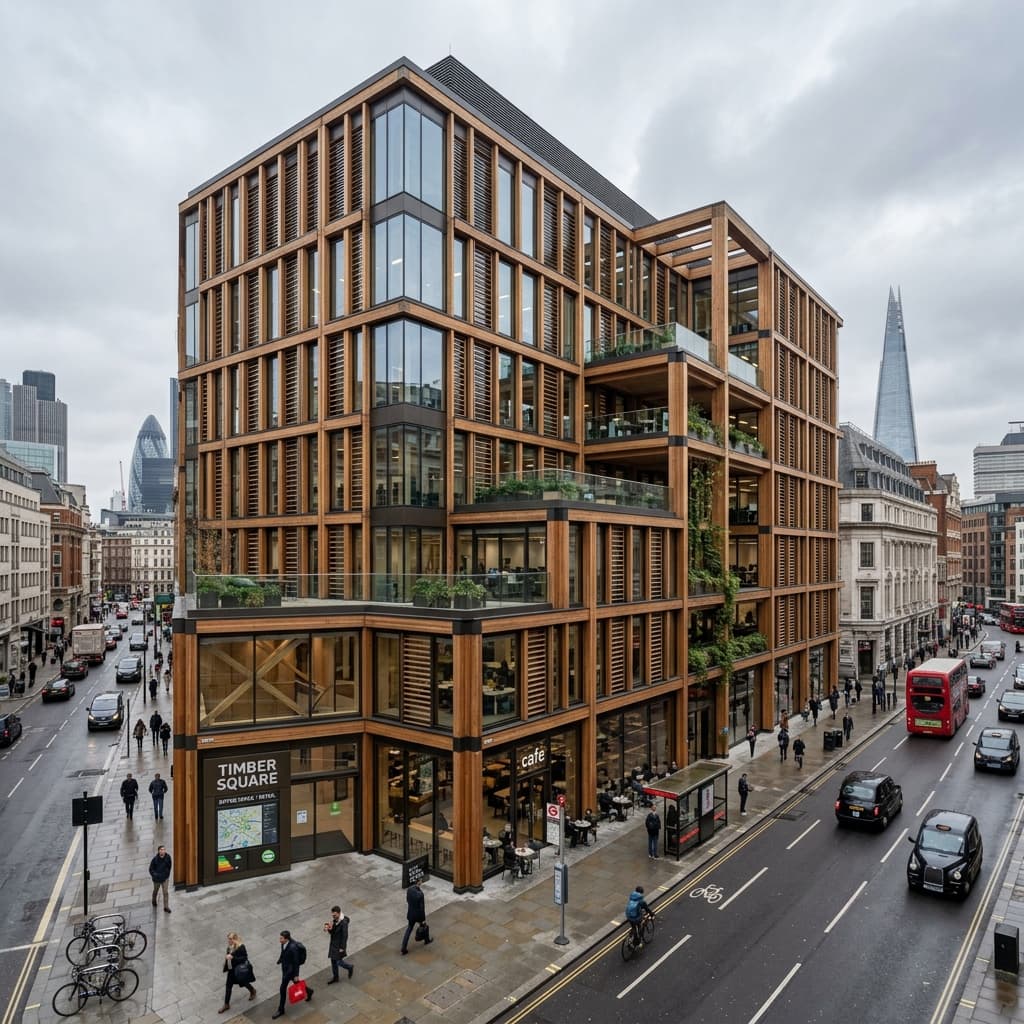
Mass timber construction opens new horizons for realizing promenade architecturale. Thanks to the lightness and structural possibilities of CLT and glulam, architects can design long cantilevered routes, spiral ramps, and multi-level spaces that are organically integrated into the landscape. Wood adds tactile warmth and a visual connection to nature, enhancing the sense of strolling. The material's aesthetics combine with sustainability, making timber buildings an ideal platform for reinterpreting the modernist heritage.
Conclusion
Le Corbusier's concept continues to inspire architects, evolving from a purely modernist manifesto into a tool for creating an ecological and human-centered environment. Mass timber construction demonstrates how a classic principle takes on new resonance, responding to the contemporary demands of society and nature.
Visual
The image is tied to the article topic and stored in the portal's local media library.